By the time someone calls asking for a “quick underarm session before the weekend,” they have usually tried it all. Shaving that prickles the next day. Waxing that leaves little red bumps on the upper thighs. Tweezing those stubborn chin hairs that somehow return thicker. Laser hair removal, done well, feels like a relief from that cycle. It is not magic and it is not a one‑and‑done fix, but it is the most reliable path I have seen to long‑term hair reduction with real day‑to‑day benefits.
I have treated hundreds of women who wanted smoother skin for practical reasons more than vanity. The swimmer who needed fast laser hair removal for training. The new mom who wanted underarm laser hair removal so she could skip yet another task in an overloaded week. The executive who booked face laser hair removal because she was tired of planning her mornings around a magnifying mirror. The details matter, from technology to timing. If you are weighing a laser hair removal treatment plan, you deserve a clear picture of how it works, what it costs, what it feels like, and how to get the results you want without compromising skin health.
What laser hair removal really does
Laser hair removal targets pigment in the hair follicle. The device sends light at a specific wavelength, which melanin in the hair shaft absorbs. That light converts to heat, damaging the follicle’s ability to grow a robust hair in the future. It is best described as laser hair reduction. Most people see 70 to 90 percent reduction in coarse, dark hair after a series. That last 10 to 30 percent is a mix of finer, lighter regrowth and dormant follicles that later wake up thanks to hormones or genetics. Some patients achieve near‑bare skin in target areas for years. Others maintain with a touch‑up session once or twice a year.
The growth cycle matters. Hairs pass through an active growing phase, anagen, when the root is attached and richly pigmented. Laser is most effective in this window. Because not all hairs are in the same phase at once, you need multiple sessions, spaced out so each pass catches a new cohort in anagen. On the face, intervals are typically 4 to 6 weeks. On the body, 6 to 8 weeks, sometimes stretching to 10 or 12 as growth slows.
One honest limitation: gray, white, and very light blond hair lack enough pigment for current lasers. Red hair can be unpredictable. If your hair is light and fine, your results may skew lower. It is smarter to talk about effectiveness upfront than to overpromise permanent laser hair removal when biology resists.
Technology that meets your skin, not the other way around
A few terms get tossed around when you search “best laser hair removal” or “laser hair removal near me.” They are not marketing fluff; they reflect real differences that affect safety and results.
Diode laser hair removal, often around 805 to 810 nm, is versatile and efficient for many skin types, especially Fitzpatrick II to IV. It penetrates well, and with modern cooling tips it balances speed and comfort. Alexandrite laser hair removal, 755 nm, is excellent for lighter skin tones, typically Fitzpatrick I to III, with coarse dark hair. It has a strong affinity for melanin, which is why it feels so effective on pale skin with dark hair, but that same affinity raises risk for darker skin if not used carefully. Nd:YAG laser hair removal, 1064 nm, travels deeper with less melanin absorption in the epidermis, making it the safer pick for darker skin tones, often Fitzpatrick IV to VI. It is my go‑to for patients of African, South Asian, Middle Eastern, and Afro‑Latina backgrounds, or for anyone with a recent tan.
Cooling makes a difference. Devices that integrate contact cooling or chilled air reduce discomfort and protect the epidermis. That is part of what allows for fast treatment speeds without blistering or pigment change. Intense pulsed light, or IPL, is sometimes marketed as hair removal. It can work, but it is not a true laser. Think of IPL as a broadband light source that does many jobs moderately well but lacks the precision and power of a dedicated hair removal laser. If you have sensitive or darker skin, or you want the fewest sessions, I usually steer you toward diode or Nd:YAG.
From face to bikini: how areas differ in feel, speed, and sessions
Hair behaves differently by region. Hormones, density, and skin thickness change the experience.
Upper lip and chin: Face laser hair removal is quick, often 5 to 10 minutes if we are targeting the upper lip, chin, or jawline. Expect a light snapping sensation, stronger on the lips where nerve endings are dense. Because facial hair cycles fast, you will come in every 4 to 6 weeks. Women with PCOS or chin‑dominant growth usually need more sessions and might benefit from maintenance a few times a year. For fine peach fuzz, manage expectations. Lasers love pigment, so darker terminal hairs respond best.
Underarms: Underarm laser hair removal is the entry point for many because the payoff is immediate. No shadow, fewer ingrown hairs, and treatments take about 10 minutes. Six to eight sessions spaced 6 to 8 weeks apart is typical. The skin is resilient here and cooling helps, so the discomfort score most patients give me is 3 to 4 out of 10.
Bikini and Brazilian: Bikini laser hair removal can mean a simple tidy along the line or full hair removal for private parts. The skin here is sensitive, but modern devices and a topical anesthetic make it manageable. It takes 15 to 30 minutes depending on how much we treat. Most women need 6 to 8 sessions with maintenance every 6 to 12 months. Plan this area at least 2 weeks before beach trips so any transient redness fades and to respect sun exposure rules.
Legs: Leg laser hair removal is the best time saver in the long term. Lower legs often finish faster than thighs because hair is denser and darker near the shin and calf. Full legs may take 35 to 60 minutes. Six to eight sessions is common. Runners love the absence of friction bumps, and I hear fewer complaints of folliculitis after training.
Arms, hands, and undercarriage details: Arm laser hair removal suits women with dark forearm hair that shows under light fabrics. The hair tends to be finer than underarms, so results are more varied. For bodybuilders or endurance athletes, smoothing the forearms and hands can cut down on tape snagging and post‑workout irritation. Back and chest laser hair removal shows up more in male consultations, but trans and nonbinary patients often include these areas in a full body laser hair removal plan. A good clinic will tailor to your goals rather than force a package.
What a professional laser hair removal session feels like
A proper laser hair removal consultation comes first. We review medical history, medications, tanning habits, and hair and skin color. I assess your Fitzpatrick skin type, note any history of keloids, melasma, or post‑inflammatory hyperpigmentation, and we discuss your goals. We can do a patch test on a small area at conservative settings, then check the skin’s response in 48 to 72 hours. If you are searching for a laser hair removal clinic near me and show up to a place that wants to skip the consult and jump to a full body session, move on.
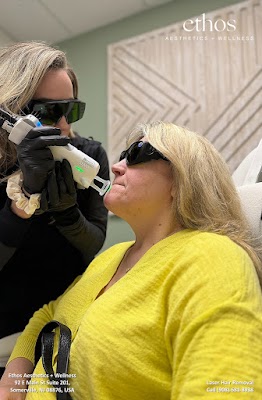
On treatment day, the area should be shaved within myethosspa.com Somerville laser hair removal 12 to 24 hours. Skip makeup, deodorant, self‑tanner, and heavy lotions. We place protective goggles, clean the skin, and sometimes apply a thin conductive gel. Each pulse feels like a warm snap or a rubber band flick with a cool touch in between, thanks to integrated cooling or a chilled air device. You may notice a faint sulfur smell as hairs singe. For small zones like the underarm or upper lip, the whole process can be shorter than finding parking. Larger areas like legs or back take longer, but good devices cover ground quickly.
Most patients describe the immediate aftermath as a mild sunburn feeling for a few hours. The follicles look bumpy and slightly red, called perifollicular edema, which is a sign we hit the target. Hairs either shed over 1 to 2 weeks or, if we shaved just before, they appear to stop growing. Both are normal. If you are doing face laser hair removal, avoid makeup for several hours, then use mineral formulas for the next day if you must. For bikini laser hair removal, wear breathable cotton underwear and skip hot yoga for 24 hours.
Preparing for best results
Here is a simple checklist I give patients before their first laser hair removal appointment.
- Avoid sun exposure, sunbeds, and self‑tanner for 2 to 4 weeks on the treated area. A fresh tan raises risk of pigment change. Shave the area 12 to 24 hours before your session. Do not wax, thread, or tweeze for at least 3 to 4 weeks; we need the follicle intact. Pause exfoliating acids and retinoids on the treatment zone for 3 to 5 days before and after. Gentle cleansing and a bland moisturizer are enough. Tell your provider about medications. Some antibiotics, acne drugs, and herbs increase photosensitivity. We may reschedule to keep you safe. Plan workouts, saunas, and hot baths for another day. Heat and friction right after a session can aggravate the skin.
Aftercare, side effects, and when to call
Laser hair removal recovery is usually easy. Cool compresses and a fragrance‑free moisturizer take the edge off any warmth. Tiny red bumps fade within hours to a day. In darker skin or melanin‑rich areas like the bikini line, pigment may deepen slightly before stabilizing. That is part of why I prefer conservative early settings and Nd:YAG for safety if you are richly pigmented.
Common side effects include temporary redness and swelling around follicles, transient darkening or lightening in the area, and rare histamine‑type itch. Ingrown hairs generally improve after a few sessions because the hair becomes finer and less likely to coil under. Hyperpigmentation or blistering is uncommon with proper settings and no recent tan. If you see any weeping, severe swelling, or lines that look like griddle marks, call right away for guidance. We can settle the skin and prevent scarring with timely care.
Cold weather helps. Many women start a series in fall or winter to avoid fights with sun exposure. If your calendar only allows summer, be meticulous with SPF 30 to 50 daily, reapply outdoors, and wear physical coverage when practical.
Safety first: who should wait, and how to minimize risk
Some situations call for delay or a modified plan. Pregnancy and breastfeeding are common questions. There is no definitive evidence that external laser on hair follicles harms a fetus, but out of caution, most clinics, including mine, recommend postponing until after delivery and lactation. Hormonal shifts also make results less predictable.
Recent isotretinoin use is a no. Give it at least 6 months off systemic isotretinoin before laser hair reduction to reduce risk of scarring. Topical retinoids are fine to pause briefly, but systemic therapy changes wound healing. Oral antibiotics and some herbal supplements, like St. John’s wort, can increase photosensitivity; disclose them, and we can time sessions accordingly. Active infections on the skin, open wounds, eczema flare‑ups, or psoriasis plaques in the target area need calm skin first. For recurrent cold sores on the lip or bikini line, I prescribe antiviral prophylaxis before a session to prevent a flare.
Darker skin can absolutely have safe laser hair removal with proper technology, settings, and spacing. If you are Fitzpatrick V or VI and a clinic insists on alexandrite at aggressive settings, that is a red flag. Ask about Nd:YAG, test spots, and cooling. For people with a history of keloids or a tendency to hyperpigment, I chart a slower ramp and sometimes pair treatments with gentle pigment‑balancing topicals between sessions.
Picking the right laser hair removal clinic
Prices and marketing vary wildly, which is why choosing a provider with good judgment matters as much as the machine. When you type best laser hair removal clinic into a search bar, you will see everything from med spas to dermatologist offices to chains pushing laser hair removal packages with monthly plans. Use this quick filter to protect your skin and your budget.

- Ask what devices they use and for which skin types. A professional laser hair removal center should be fluent in diode, alexandrite, and Nd:YAG, with a clear plan for your tone and hair. Look for a proper consultation and patch test policy, plus eye protection for every session. Safe laser hair removal is a system, not a single appointment. Check who actually fires the device. Trained nurses, physician assistants, or laser hair removal specialists under medical oversight inspire more confidence than a revolving cast of technicians with minimal training. Read laser hair removal reviews with attention to healing and responsiveness, not just speed. How did they handle questions, touch‑ups, or side effects? Be wary of “cheap laser hair removal” that locks you into long contracts without flexibility. Affordable laser hair removal is possible, but transparency beats too‑good‑to‑be‑true specials.
How many sessions, how often, and what maintenance looks like
Most women need 6 to 8 sessions per body area. Coarse, dark hair on pale skin might clear faster. Fine facial hair or hormonally driven growth can take 8 to 12, with occasional tune‑ups. Spacing matters more than enthusiasm; coming every 2 weeks will not speed results if the hair is not in the right phase. I typically space sessions 4 to 6 weeks apart for the face, 6 to 8 weeks for underarms and bikini, and 8 to 10 weeks for legs and arms. As hair thins and growth slows, the intervals stretch further.
Maintenance is not failure. Bodies change. Thyroid shifts, perimenopause, PCOS, and new medications influence hair. A single touch‑up every 6 to 12 months keeps things smooth for many. If you stop altogether, you might regain some fine hair over time, but it is usually lighter and sparser than your starting point.
What it costs, and how to evaluate value
Laser hair removal cost varies by region, device quality, and provider expertise. In most U.S. Cities, underarm laser hair removal ranges from about 75 to 200 dollars per session. Bikini laser hair removal can span 100 to 300 for a standard line or 200 to 500 for a Brazilian. Face areas like the upper lip may be 50 to 150 per session, while full legs can range 275 to 700 depending on geography and clinic type. Many practices offer laser hair removal package deals, like 6 sessions for the price of 5, or a monthly plan that spreads payments. Seasonal laser hair removal specials or first‑time laser hair removal offers show up around slower months.
Price per session is only part of the equation. Fewer sessions with an advanced laser hair removal machine and a thoughtful technician can save money over time. Beware rock‑bottom pricing that relies on IPL for all skin types or packs 12 sessions into a bundle you cannot adjust. Ask whether the clinic does complimentary touch‑ups if a treated area misses a strip, and whether they pro‑rate remaining sessions if you finish early. Affordable should still mean professional, safe, and effective.
Comparing options: laser vs waxing, shaving, and electrolysis
Shaving is cheap and quick, but the regrowth can appear the same day, especially for underarms and bikini. Razor bumps and ingrown hairs plague many with curly or coarse hair. Waxing removes the hair shaft, so you get 2 to 4 weeks of smoothness if your skin tolerates it, but recurrent trauma and heat can worsen hyperpigmentation in those prone to it, especially along the bikini line and inner thighs. Over years, you spend far more on waxing than on a laser series.
Electrolysis is the only FDA‑recognized method for permanent hair removal because it destroys follicles one by one, regardless of hair color. It is fantastic for scattered white or red hairs on the chin or areola where laser is ineffective. It is slow for large areas like legs. Many women combine methods: laser for the bulk, electrolysis for stragglers the laser cannot see.
Laser sits in the middle. It offers fast coverage, excellent reduction, and meaningful relief from ingrowns. It is not completely painless, but with cooling, careful settings, and numbing when appropriate, it is tolerable. A short session that saves you hours per month is a reasonable trade.
Special situations and realistic expectations
Sensitive skin: If you flush easily or react to fragrances, laser hair removal for sensitive skin is still possible. We choose devices with strong cooling and pare back post‑care to the simplest routine. Gentle mineral sunscreen and a ceramide moisturizer go a long way.
Dark skin: Laser hair removal for dark skin requires respect for melanin and an Nd:YAG‑driven protocol. Expect excellent results with fewer complications when settings are conservative early and increased gradually. Avoid clinics that dismiss your concerns or lack the right technology.
Light skin with fine hair: If your hair is light brown or fine, manage expectations for legs and arms. We can still achieve laser hair reduction, but the end point might be 60 to 70 percent rather than 90. You may need more sessions or occasional maintenance.
Hormonal hair: For chin, neck, and sideburn areas tied to PCOS or perimenopause, think of laser as long‑term management. It works, but you may need periodic boosts. Pairing with medical management of hormones, when appropriate, improves durability.
Athletes and swimmers: Start in the off‑season if possible. Laser hair removal for arms and legs can reduce friction and ingrown hairs from tight gear. Avoid pool chemicals for 24 to 48 hours after a session.
Travel and events: If you are planning a beach wedding or a trip, finish your series a month before, then maintain sunscreen discipline. Sunburned skin cannot be treated. If sun exposure is unavoidable, protect the area with UPF fabric and shade.
The small touches that make it feel close to painless
I avoid promising painless laser hair removal. Pain is subjective and depends on hair density, cycle phase, and anxiety. That said, the right setup makes a huge difference. Topical anesthetic applied 30 to 45 minutes before bikini or upper lip sessions takes the sting down a notch. Blowing chilled air parallel to the beam and pausing briefly on hot spots lets heat dissipate. We start with a test pulse in the most sensitive zone so you are not bracing for the unknown. Good communication helps: tell your technician if you feel sharp, lingering heat rather than a quick snap. That can signal energy that is too high or a need to adjust pulse width.
When full body laser hair removal makes sense
Full body laser hair removal is not required for most, but for those who want a top‑to‑toe reset, it can be cost‑effective and time efficient. The catch is planning. Devices and staff must be able to treat for an hour or more in a way that avoids overlapping passes and respects skin response. If you go this route, insist on a thorough mapping and a plan to rotate sections so you are not overtaxing the skin. I often suggest breaking it into two visits the first time to gauge reaction and refine settings.
How to book smart, and what “near me” should really mean
Typing laser hair removal near me at midnight can bring up the nearest chain, but proximity is not quality. Map distance matters if it helps you stick to the schedule, yet it is worth an extra 15 minutes of travel for a top rated laser hair removal clinic with a skilled team and good machines. Book consultations with two places if you are unsure. Bring your medication list, be honest about sun exposure, and ask to see before and after photos that match your skin tone and hair pattern. If a clinic cannot show examples beyond stock images, keep looking.
The payoff I see most often
The woman who started with just underarms returns to add legs because shaving suddenly felt barbaric. The patient who battled bikini ingrowns for years comes in glowing after three sessions because the redness is gone and her skin tone looks even. The executive stops carrying tweezers to meetings. These are modest victories on paper. In real life, they are the difference between constantly managing hair and almost forgetting about it.
Laser hair removal is a service, a technology, and a relationship with a clinic that knows what it is doing. When you pair the right device with the right skin and a realistic plan, the results are worth the time and the price. Commit to the schedule, protect your skin from the sun, and speak up if anything feels off. The smooth, low‑maintenance skin you want from face to bikini is not a fantasy. It is the product of good science, careful technique, and the steady patience of letting your hair cycle play out session by session.